
Smart Lock Distributor Pricing and Margin: A Playbook Beyond Price Wars
Most smart lock distributors run a one-layer business: buy a lock, sell a lock, hope nothing breaks. The margin math in this playbook is different. It stacks three revenue layers — hardware, modules, service — and prices each against the real cost of keeping doors working. If you are tired of defending your price against generic locks on a marketplace screenshot, this is the structure that changes the conversation.中文摘要:多数智能锁经销商做的是单层生意:进锁、卖锁、祈祷别坏。本文的毛利算法不同:硬件、模块、服务三层收入叠加,每一层都对着"让门持续可用"的真实成本定价。如果你已厌倦拿着电商截图跟杂牌锁比价,这套结构会改变整个对话。(正文为英文)
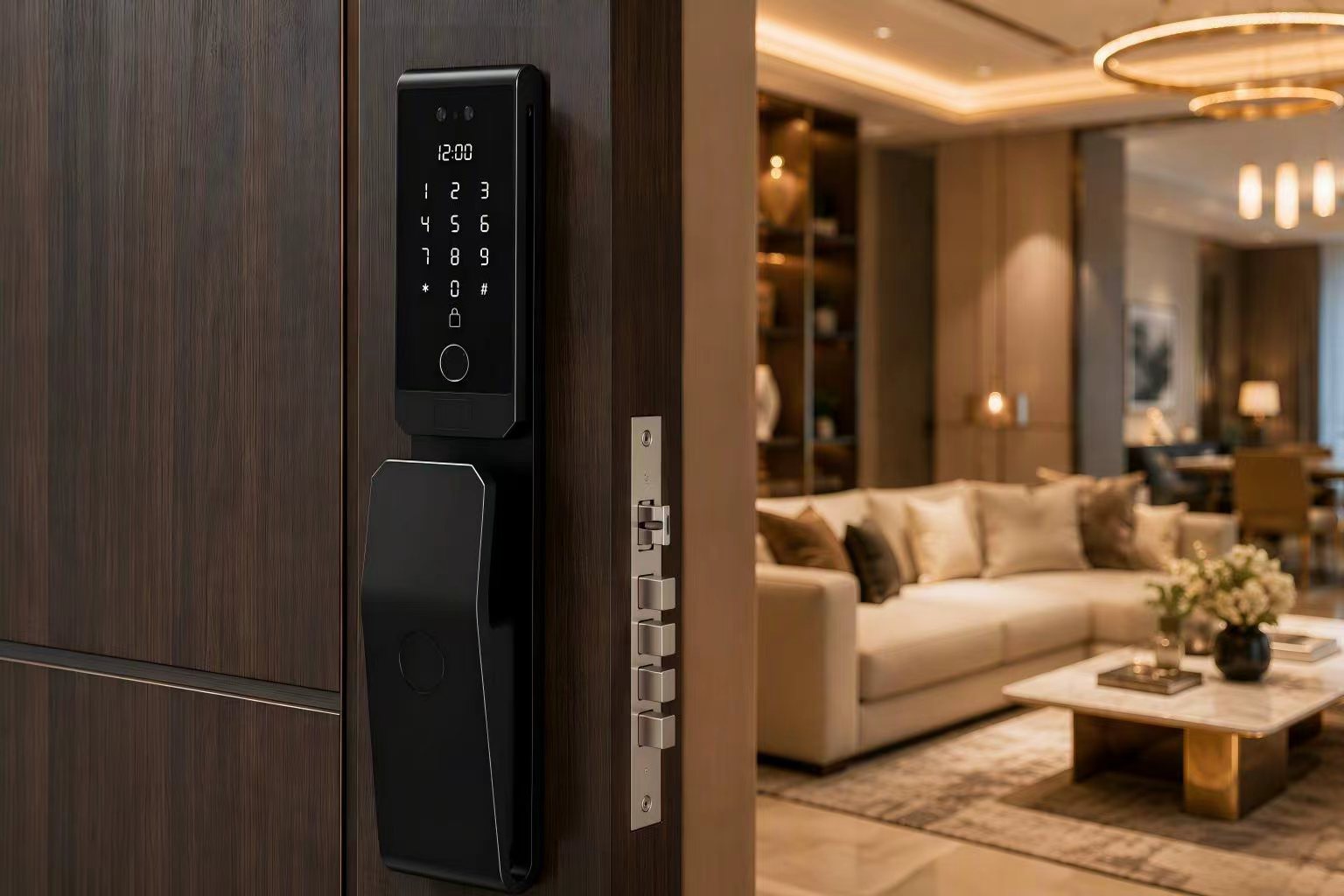
The One-Layer Business Is Structurally Unprofitable
Hardware-only distribution has a built-in trap. Your sale price competes with every generic import, but your real costs arrive after the sale: a failed lock means a technician visit at typically $50–$150, a warranty return, or a discount to keep an angry customer. On a conventional sealed smart lock, that after-sales bill comes straight out of the hardware margin you already booked. Distributors who look profitable on the invoice discover the leak at year-end. The fix is not a higher markup on the same product — it is a product whose service economics are different, and a price structure that captures them.
Layer One: Hardware Priced Against Ownership Cost
Quote the lock together with the cost of keeping it working. A generic lock's failure path is a $50–$150 technician visit plus waiting; Trueway's key-swappable platform replaces that with a $15–$45 module swapped on site in under 10 seconds — turn the mechanical key right to open, left 90° to release the front-panel module, click the spare in. The platform is designed to cut after-sales service visits by up to 80%. That is a quantifiable ownership-cost advantage, and it justifies a hardware price that does not chase the cheapest import. The structure also carries multi-country patent protection (US 12,499,723 B1 · DE202025001780 · CN201610502753, design patents CN202630085403 / CN202630085870), so your quotation is not like-for-like with a generic listing — say so in the proposal, with the numbers attached.
Layer Two: Modules as the Compounding Line
Modules turn an installed base into recurring revenue. Spares sell in the $15–$45 band; upgrades sell whenever a customer wants a different feature set on an installed lock body — a card-primary door becoming fingerprint-plus-card, for example, without replacing the lock. Every project you ship expands the base that generates this demand. And because the inventory is modules rather than whole locks, the working capital stays light: Stock Modules, Not Locks. Track the module attach rate per 100 doors as a first-class metric next to hardware margin — it is the number that tells you whether your business compounds.
Layer Three: Service as a Sellable Product
Service contracts are a third revenue layer, not a cost center — if your service model can afford them. Module-level service makes response targets cheap to keep: on-site staff or reseller counter staff perform the swap with the mechanical key as the only tool, faulty modules return by parcel, and the technician dispatch disappears from most tickets. You can price an SLA against same-day or next-morning restoration and keep its margin, because the delivery cost is a stocked module rather than a van. For integrators, this is also tender ammunition: a serviceable lock with a written module-supply SLA is a measurable commitment competitors selling sealed units struggle to match.
The Three-Layer Margin Stack Compared
| Revenue / Cost Layer | Generic Sealed Smart Lock | Trueway Key-Swappable Platform |
|---|---|---|
| Hardware sale | Invoice price vs every other import; margin erodes in price wars | Priced against ownership cost; patented structure resists like-for-like comparison |
| After-sales cost per failure | $50–$150 technician visit, or full-unit return | $15–$45 module, swapped on site in under 10 seconds |
| Recurring revenue | Little — next sale depends on the next project | Spares + upgrades on the installed base; attach rate per 100 doors |
| Service contracts | Risky to price; dispatch costs are unpredictable | Sellable SLA; platform designed to cut service visits by up to 80% |
| Brand control | Same product as the next importer | OEM / ODM under your own brand at volume |
Price Ladders, Channel Discipline and Trial Math
Build the ladder by specification, not by discount. The RF-2 anchors the mainstream tier — fingerprint (capacity 100, identification in about 1.5 seconds), IC card (capacity 50), passwords and built-in Tuya WiFi on 2.4GHz networks, with USB-C emergency power. The RF-3 flagship — push-pull design, 3D face recognition and video intercom — holds the premium tier for residential and hospitality projects. Keep project lines distinct from retail kits so tender pricing does not leak into marketplace comparisons, and write the key-swappable structure into tender specifications to protect the margin you quoted. Then test the whole stack before scaling: Trueway supports small trial orders, and a mixed module kit lets one trial measure hardware margin, module attach rate and service cost per door together. Every unit ships from the 2,500㎡ Zhongshan factory after aging, salt-spray and high/low-temperature testing — a QC story your premium tier can stand on.
FAQ
How do I price against cheaper generic smart locks?
Stop comparing on the invoice alone. Price the ownership story: a generic lock's failure costs a $50–$150 technician visit, while a Trueway module swap costs $15–$45 and takes under 10 seconds on site. The key-swappable structure carries multi-country patent protection, so the comparison is not like-for-like — and your quotation should say so explicitly.
What margin does the spare-module business add?
Modules turn one-time hardware sales into a recurring line: spares in the $15–$45 band, plus upgrades as customers add features to installed lock bodies. Because the installed base keeps generating demand, the module layer compounds with every project you ship — Stock Modules, Not Locks also keeps the inventory capital-light.
Should we sell service contracts separately from hardware?
Yes — service is a distinct revenue layer with its own margin. A module-level service model makes response targets affordable to keep: on-site staff swap a module in under 10 seconds, and the platform is designed to cut after-sales service visits by up to 80%. That lets you price an SLA competitively while protecting its margin.
How do we keep project pricing from leaking into retail?
Separate the tiers by specification, not by discount: write the key-swappable structure and module-level service terms into tender specifications, and keep retail on standard kits. OEM and ODM programs let you differentiate further under your own brand, so your project line and retail line are not directly comparable on a marketplace screenshot.
Can we test the margin model before committing volume?
Yes. Trueway supports small trial orders: run one project or one reseller batch, track hardware margin, module attach rate and service cost per door, then scale. The mixed module kit lets a single trial cover several door types on one lock body, so the test measures the full revenue stack rather than hardware alone.
Related reading: White Label Smart Locks Without the Race to the Bottom: Differentiation Through a Patented Key-Swappable Design · How to Write Smart Lock Tender Specifications That Protect Your Margin.
Learn more: RF-2 product page · production & QC · patents & certifications · B2B FAQ.
Rebuilding your price list around the three-layer model? Ask for a tiered quotation with module pricing and trial-order terms.正在围绕三层模型重构价格体系?欢迎索取含模块报价与试单条款的分层报价单。