
Smart Locks for Schools and Hospitals: A Bulk Project Procurement Guide
Schools and hospitals are the most demanding bulk buyers in the door-hardware world: hundreds of doors, constantly rotating users, rooms that cannot afford downtime, and procurement teams answerable to auditors. This guide covers how to zone an institutional project, which credential policies work, and why the service model behind the lock matters as much as the lock itself.中文摘要:学校和医院是门锁行业最苛刻的批量买家:数百樘门、不断轮换的使用者、不能停用的房间、以及对审计负责的采购团队。本文讲透机构项目的分区方法、凭证策略选择,以及为什么锁背后的服务模式与锁本身同样重要。(正文为英文)
Why Institutional Projects Are Different
A hotel has one user type — the guest. A school or hospital has half a dozen: permanent staff, rotating nurses and teachers, contractors, cleaning crews, students, patients' visitors. Doors range from low-stakes storage rooms to medication rooms and labs where access must be logged and revocable in minutes. Add semester changes and shift rotations, and the credential workload runs year-round. The traditional answer — master-key mechanical systems — creates its own liabilities: lost keys force rekeying cascades across whole wings, and there is no record of who opened which door when. For distributors and integrators bidding these projects, the winner is rarely the cheapest lock; it is the lock whose total operating burden the facility team can actually carry.
Zone the Building Before You Spec the Lock
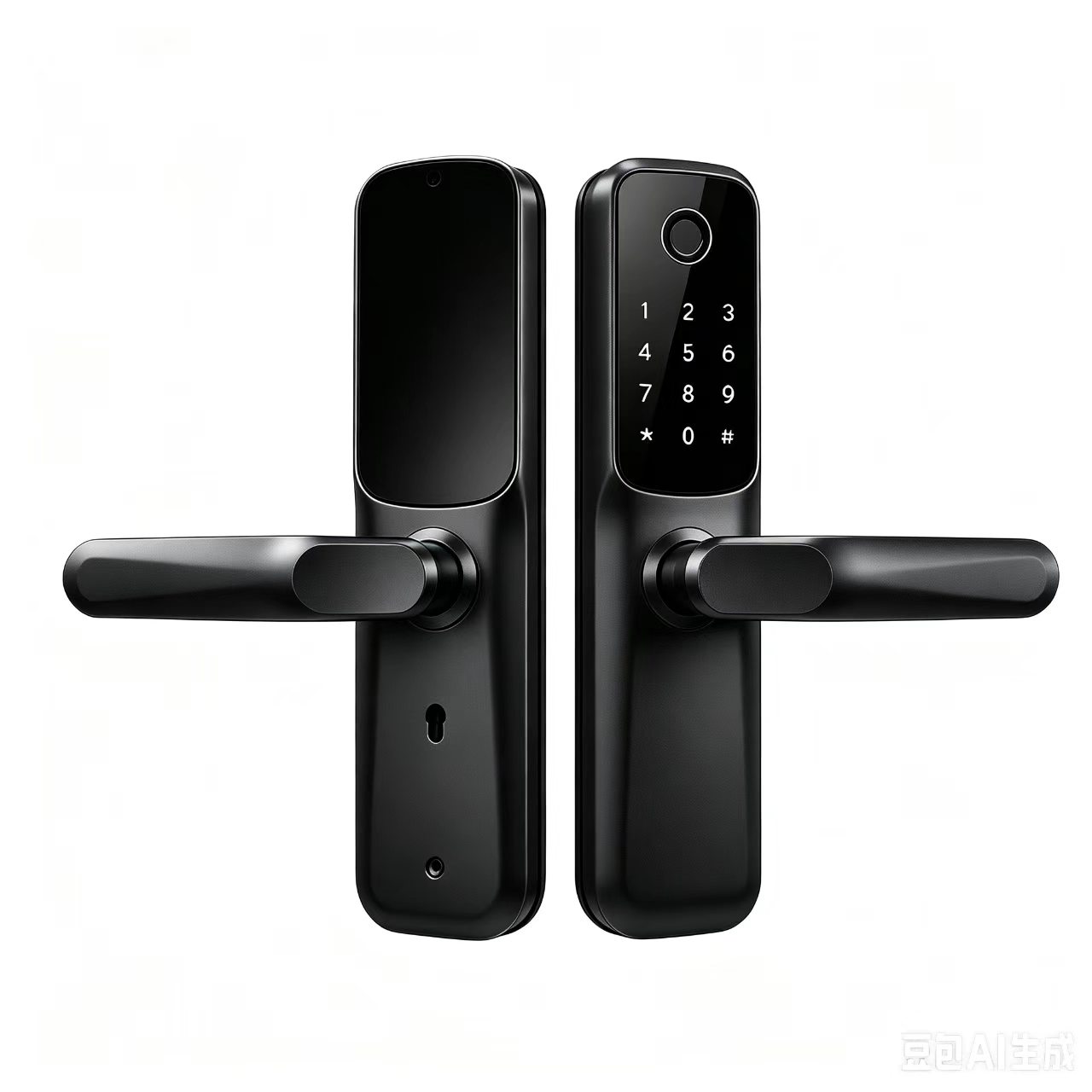
The practical first step is zoning by risk and traffic, not by department. Public corridors and classrooms need durability and simple credentials; staff rooms and offices want fingerprint convenience; pharmacies, server rooms and archives need audit trails and instant revocation. On a conventional product line, each zone pushes you toward a different model — three or four SKUs, three or four spare-parts pools, three or four training manuals for the facility team. Trueway's key-swappable platform collapses this: one lock body covers the building, and the front-panel module defines the feature set per zone. A card-focused module for classrooms, a fingerprint-plus-card module for staff areas — same body, same installation skill set, same spare pool. Stock Modules, Not Locks.
Credential Policy: What Works in Practice
The RF-2's credential mix maps well onto institutional reality. IC cards (capacity 50 per door) suit rotating staff — issue at the start of a shift or semester, revoke centrally when someone leaves. Fingerprint (semiconductor sensor, identification in about 1.5 seconds, capacity 100) suits fixed staff rooms where the same people enter daily. Passwords with anti-peep support and app-issued temporary credentials cover contractors and visitors without handing over anything physical. Built-in Tuya WiFi on 2.4GHz networks lets administrators manage all of it remotely per door and pull unlock records for audit requests. And the mechanical key stays as the final fallback under facility-management control — doors remain operable without power or network, which matters for business-continuity reviews. Buyers must still verify local fire and egress codes with authorities; on the electronic side, FCC-ID (US) and CE-RED (EU) certifications come with verifiable documentation.
Uptime: The Line Item Institutional Buyers Underestimate
In a school or hospital, a failed lock is not an inconvenience — it is a room out of service. A ward door that will not open delays care; a locked-out classroom reshuffles a timetable. On a conventional smart lock, the failure path is a technician visit: typically $50–$150 per call, plus hours or days of waiting while the room limps along on a workaround. Across a 400-door campus and a five-year service window, those visits become the largest line in the lock budget.
Trueway's patented key-swappable structure (US 12,499,723 B1 · DE202025001780 · CN201610502753, design patents CN202630085403 / CN202630085870) turns the repair into a facility task: turn the mechanical key right to open the door, turn it left 90° and the front-panel module — reader, electronics, firmware — releases. A $15–$45 spare module from the maintenance drawer clicks into place in under 10 seconds, and the room is back in service before a ticket would normally even be assigned. The platform is designed to cut after-sales service visits by up to 80%. For the integrator, this is also the tender differentiator: a serviceable lock with a stocked module shelf is a measurable uptime commitment competitors selling sealed units cannot match.
Door Zone → Credential & Module Configuration
| Zone | Typical Users | Recommended Configuration |
|---|---|---|
| Classrooms / general wards | Rotating teachers, nurses, cleaning crews | IC card-primary module + password fallback |
| Staff rooms / offices | Fixed staff, daily use | Fingerprint + IC card module (capacity 100 fingerprints) |
| Pharmacy / server room / archives | Named personnel, audit required | Fingerprint + card + app records; instant remote revocation |
| Contractor & visitor doors | Temporary, time-boxed access | App-issued temporary passwords via Tuya WiFi 2.4GHz |
| All zones | Facility management | Mechanical key fallback + spare modules on the shelf ($15–$45 each) |
Pilot, Then Scale — and Put Service in the Contract
Institutional buyers and their integrators should treat the first order as a proof phase: one ward, one floor or one building, run through a real staff-rotation cycle. Trueway supports small trial orders, and a mixed module kit lets a single pilot cover several zones on one lock body. Track three numbers — failure events, support tickets per door, time-to-resolution — then scale with written terms: SLA on spare-module supply, module pricing locked at the $15–$45 band, and territory policy for the integrator. Every unit is assembled at Trueway's 2,500㎡ Zhongshan factory with aging, salt-spray and high/low-temperature testing before packaging; the company states plainly that it does not manufacture circuit boards and operates no SMT lines, sourcing electronic modules from qualified suppliers. For OEM and ODM partners, institutional tenders under your own brand follow the same path: pilot first, brand customization at volume.
FAQ
Which credential mix works best for schools and hospitals?
IC cards as the primary credential for rotating staff (the RF-2 holds 50 card users per door), fingerprint for fixed staff rooms (capacity 100), and passwords or app-issued temporary credentials for contractors and visitors. The mechanical key remains the final fallback, held by facility management. Zone by zone, the mix changes — which is why the module defines the feature set on Trueway locks.
What happens when a lock fails in a ward or classroom?
On a conventional smart lock, the room is out of service until a technician visit — typically $50–$150 and hours or days of waiting. On Trueway's key-swappable platform, facility staff turn the mechanical key 90° left, release the front-panel module and click a $15–$45 spare into place in under 10 seconds. The platform is designed to cut after-sales service visits by up to 80%.
Can the locks handle staff turnover at semester or shift changes?
Yes. Through the RF-2's built-in Tuya WiFi (2.4GHz), administrators issue, change and revoke credentials remotely per door — no rekeying, no physical key collection rounds. Unlock records per door support the audit requirements institutional buyers typically need.
Do smart locks meet fire and egress requirements for institutional buildings?
Egress and fire-door rules vary by jurisdiction and are the buyer's responsibility to verify with local authorities — a competent supplier supports this with documentation. Trueway provides FCC-ID (US) and CE-RED (EU) certifications for the electronic side, and the mechanical key override keeps doors operable even without power or network.
How should we pilot before a campus-wide rollout?
Start with one ward, one floor or one building: Trueway supports small trial orders, and a mixed module kit lets the pilot cover several door types on a single lock body. Run the pilot through one staff-rotation cycle, track failure events and support tickets, then scale with written SLA and spare-module stocking terms.
Learn more: RF-2 product page · production & QC · patents & certifications · B2B FAQ.
Bidding a school or hospital project? Ask for a zoned quotation with a pilot batch and module stocking plan.正在投标学校或医院项目?欢迎索取含试点批次与模块备货计划的分区报价。