
Entering the Latin America Smart Lock Market: A Distributor's Playbook
Latin America is not one smart lock market but a dozen — different languages, import regimes, door standards and buyer expectations from Mexico City to Santiago. For distributors and brand owners the opportunity is real: urbanization, a hospitality pipeline, and a professionalizing property sector. So is the core risk: after-sales across long distances with thin technician networks. This playbook covers how to pick beachhead markets, structure the first order, and turn the service model into the reason you win the account.中文摘要:拉丁美洲不是一个单一的智能锁市场,而是十几个——从墨西哥城到圣地亚哥,语言、进口制度、门体标准和买家预期各不相同。对经销商和品牌商而言机会是真实的:城市化、酒店业管线、以及日益专业化的物业行业;核心风险同样真实:跨长距离、技师网络稀薄的售后。本文讲透如何选择桥头堡市场、设计首单结构,以及如何把服务模式变成你赢单的理由。(正文为英文)
A Region of Many Markets — Pick Beachheads Deliberately
Treating "LatAm" as a single launch is the classic first mistake. Mexico offers proximity to North American supply chains, a deep hotel and resort project pipeline, and urban residential demand concentrated in a few metros. Brazil is a continent-scale market of its own — Portuguese-speaking, with complex import taxes and a strong local distribution culture that rewards committed partners and punishes fly-by-night exporters. Colombia, Chile and Peru bring growing apartment construction and increasingly professional property management; the Caribbean adds corridor-heavy resort projects. Each has its own door prep conventions and buyer expectations. Door hardware practice is not uniform across the region: mortise dimensions, backset preferences and door thickness ranges vary between markets, and a resort corridor door in the Caribbean often differs from an urban apartment door in the same country. Before committing a container to one configuration, have your installer network measure a sample of target doors. Trueway's OEM/ODM program handles lock-body adaptation for volume projects, but catching a door-prep mismatch at pilot stage costs a couriered sample; catching it after import costs a warehouse of wrong stock. The workable strategy is one or two beachheads matched to your existing channel — hotel projects, retail distribution or property-management accounts — then expansion after a proven sell-through cycle. Language support follows the same logic: Spanish and Portuguese sales materials and app interfaces (the Tuya ecosystem covers both) matter more than a translated brochure.
What Buyers Ask First — and What to Have Ready
Across the region, distributor and project buyers open with four questions. First, price bands and margin room — expect direct comparison against both premium imports and local assembly. Second, documentation: Trueway supplies FCC-ID (US) and CE-RED (EU) certification for the electronic side with verifiable paperwork; local homologation and import requirements vary by country and remain the importer's responsibility to confirm with authorities and brokers, with the supplier supporting via test reports, samples and product files. Third, warranty and spare parts policy — this is where most import brands are weakest, and where the pitch below lands. Fourth, customization: OEM and ODM programs covering logo, packaging and app configuration, so a regional brand can launch under its own name. Answer all four in writing before the first container is discussed; vague promises on compliance or service are how import brands burn a market.
The After-Sales Gap Is the Opening
Geography is the structural problem. Distances are long, technician networks outside capital cities are thin, and shipping a failed lock back to Asia for repair is uneconomic — so on a conventional sealed smart lock, a failure typically means a dead door for weeks or a $50–$150 local service visit that erodes the distributor's margin and the brand's reputation at once. Trueway's patented key-swappable structure (US 12,499,723 B1 · DE202025001780 · CN201610502753, design patents CN202630085403 / CN202630085870) inverts the economics: courier a $15–$45 spare module — small and light enough for domestic express — and the end customer or a local handyman turns the mechanical key right to open the door, left 90° to release the front-panel module, and clicks the spare into place in under 10 seconds. The platform is designed to cut after-sales service visits by up to 80%. Inventory follows the same logic: Stock Modules, Not Locks — distributor working capital sits in a carton of compact modules rather than a pallet of whole-lock spares, and multi-country patent protection helps defend that service advantage against copycat products.
Segment → Demand Driver → Winning Offer
| Segment | Demand Driver | Winning Offer |
|---|---|---|
| Hotels & resorts (Mexico, Caribbean) | Corridor uptime, guest experience | RF-2 card-primary configuration + on-site module stock |
| Urban residential (São Paulo, Mexico City, Santiago) | Developer differentiation, short and long rentals | RF-2 fingerprint + card; builder and landlord bulk terms |
| Office & co-working | Tenant churn, contractor access | Remote credentials via built-in Tuya WiFi 2.4GHz |
| Distributor retail channel | Margin defense against generic imports | White-label OEM on a patented key-swappable structure |
Structuring the First Order
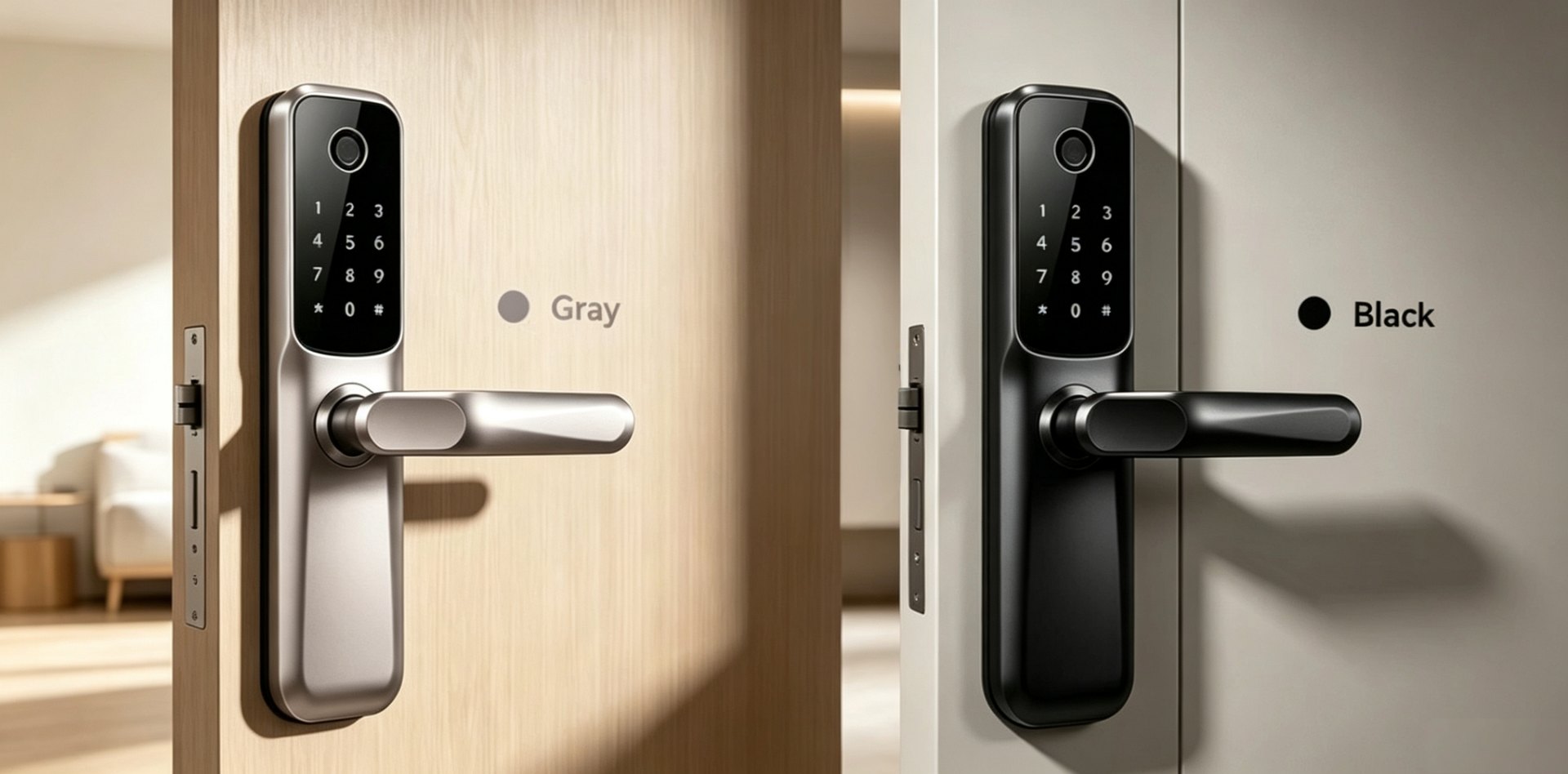
The first order should be designed as a market test, not a volume commitment. Trueway supports small trial orders, and the practical shape is one lock body plus a mixed module kit: a single shipment then covers hotel, residential and office demonstrations at once, because the module defines the feature set on a shared platform. Include spare modules at an agreed ratio from day one — service capability is part of the sales story, and the first failure handled in under 10 seconds in front of a skeptical buyer sells the next container better than any brochure. Lock the module pricing band ($15–$45) and spare-supply SLA in writing. Run one city or one channel through a full sell-through cycle, measure failure events and support tickets per door, then scale: branding under your own name via OEM/ODM at volume, with the RF-2 spec set (Tuya WiFi 2.4GHz, IC card capacity 50, fingerprint capacity 100 with identification in about 1.5 seconds, USB-C emergency power) giving sales teams concrete numbers to quote.
Logistics, Duties and Working Capital
Whole locks are bulky and heavy; modules are compact and air-freightable — which matters when a hotel corridor needs a part this week, not next sailing. Plan duty and tax treatment per country with a local broker before pricing; battery-equipped hardware can add documentation requirements on some routes, so confirm paperwork early. On the factory side, every unit is assembled at Trueway's 2,500㎡ Zhongshan facility with aging, salt-spray and high/low-temperature testing before packaging — relevant in a region that spans Caribbean humidity to high-altitude Andean cities. The company states its scope plainly: no circuit-board manufacturing and no SMT lines; electronic modules are sourced from qualified suppliers, with factory QC concentrated on assembly and final test.
FAQ
Which Latin American market should a new smart lock distributor enter first?
Match the beachhead to your existing channel: hotel and resort projects point to Mexico and the Caribbean, retail distribution points to Brazil (with Portuguese-language support), and professional property management channels point to Colombia, Chile or Peru. Pick one, prove sell-through for a full cycle, then expand — launching across the whole region at once dilutes service and marketing.
Do Trueway locks carry the certifications Latin American customs require?
Trueway supplies FCC-ID (US) and CE-RED (EU) certification for the electronic side, with verifiable documentation. Local homologation and import requirements vary by country and are the importer's responsibility to confirm with local authorities and brokers — a competent supplier supports that process with paperwork, test reports and product samples.
How do we handle after-sales across such long distances?
Ship modules, not technicians. On Trueway's key-swappable platform, a faulty lock is resolved by couriering a $15–$45 spare module; the end customer or a local handyman turns the mechanical key 90° left and clicks the module into place in under 10 seconds — versus $50–$150 and days of waiting for a conventional service visit. The platform is designed to cut after-sales service visits by up to 80%.
Can we sell under our own brand in Latin America?
Yes. Trueway runs OEM and ODM programs covering logo, packaging and app configuration through the Tuya ecosystem, which offers Spanish and Portuguese interfaces. The common path is to pilot with a small trial order first, then move to full brand customization once volume justifies it — with the patented structure helping defend your price point against generic alternatives.
What does a sensible first trial order look like?
A small batch built around one lock body plus a mixed module kit, so a single shipment covers hotel, residential and office demos at once — with spare modules included at an agreed ratio. Run it through one sell-through cycle in one city or channel, measure failure events and support tickets, then scale with written SLA and module-stocking terms.
Related reading: The Speed Advantage: How After-Sales Response Time Becomes a Smart Lock Distributor's Competitive Edge · Smart Locks for Hot and Humid Climates: A Southeast Asia Project Guide.
Learn more: RF-2 product page · production & QC · patents & certifications · B2B FAQ.
Planning a Latin America launch? Ask for a market-entry quotation with trial order terms and a spare-module plan.正在规划拉美市场启动?欢迎索取含试单条款与备件模块计划的市场准入报价。